History of the Festival National du Film Super 8
In short
The Festival National du Film Super 8 was founded by Robert Malengreau and Marcel Croës. It took place in Brussels between 1974 and 1994. From its very first year, the Festival National du Film Super 8 presented more than 100 films, and remained popular thereafter.
In 1978, an international competition was added. Super 8 festivals began to spring up around the world. In 1984, a special Homo edition was launched.
The Festival National du Film Super 8 was one of the most important on the international scene and played a major role in this movement. At the time, Super 8 was considered the future of cinema.
What is Super 8 ?
Super 8 is a film medium that became popular in the late 1960s as a way of making cinema accessible to amateur filmmakers and enthusiasts. Today, it can be compared (in a certain extent) to our phone camera, which allows as many people as possible to share their reality.
The cameras were lightweight, the film was less expensive, and once developed (usually in a photo shop), the film could be shown on a home projector.
Super 8 was widely used to share news, highlight struggles, organize workshops, make short films, fiction and documentaries, as well as political essays, but also for formal experimentation. And other forms, such as video clips, fake commercials, etc.
Quote « Tercaf
What about the International Super 8 movement ?
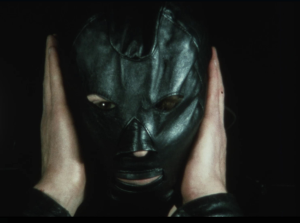
A true precursor to social media, the Super 8 offered the possibility of sharing points of view independently of professional media outlets. This allowed numerous alternatives to develop and travel around the world. Films and their filmmakers often traveled from Teheran to Bogota, passing through Brussels, of course !
People could meet and develop closer ties. In 1984, the fight for gay rights was also visible in Brussels through the Festival Internation du Film Super 8, with a special Homo edition that took place in different locations and helped relay and amplify voices.
Quote Isabel A. : «
How to save Super 8 ?
Now that Super 8 film is no longer a common technology, with other technologies such as video and digital taking over, it has become more difficult to watch these films.
Furthermore, as they were not produced professionally, they were not preserved or archived in the same way as films produced by production companies or television stations. Many films remained in the homes of their directors. Unfortunately, many of them have been damaged, lost, or thrown away. Finding them is therefore a real challenge!
With the general transition to digital archives, and the difficulty of finding the equipment needed to copy and screen films, it has become necessary to digitize them.
History of the project Résilience, led by Peliskan
Genealogy of the project led by Peliskan
In 2012, Christophe Piette, himself a Super 8 practitioner, organized a program in Namur (Belgium) around the Festival National du Film Super 8.
At the time, Mariette Michaud attended this screening. She was fascinated by the quality and originality of the films, as well as by the story told by Christophe Piette: a national film center, now defunct and of which no trace remains, used to organize workshops and make copies of Super 8 films. This bygone era, of which Christophe Piette had recovered a few fragments, seemed to have been a rich and fertile period.
But the center had disappeared. The collection had disappeared. And so had its founder, Robert Malengreau. An investigation was needed. Who was Robert Malengreau? Where were these films? How important had this Festival National du Film Super 8 been? And who had been involved in it?
Despite all these unanswered questions, this festival already appeared to be the precursor of practices and values dear to a vision of cinema promoted by the artists involved in Peliskan : on the edge, fragile, and free.
In 2021, Mariette Michaud, within the Peliskan association, began its research on the festival. In 2022, the European Union – NextGenerationEU decided to finance the preservation of the Festival National du Film Super 8. The Fédération Wallonie-Bruxelles and the director of its heritage section, Alain Goossens, supported Peliskan in this endeavor.
Isabel Arredondo
From the beginning of the research, Peliskan became aware of the work of Isabel Arredondo, an American-Spanish researcher who has studied the Super 8 movement around the world.
She began writing a book on this film movement, including a historical dimension, with the idea that the practice of Super 8 anticipated contemporary uses of moving images in social media.
For Isabel Arredondo, Belgium played an essential role in this international history: according to her, Robert Malengreau’s festival has been the most important international festival dedicated to Super 8 since 1980.
In 2012, when the « Fonds du centre de création et de diffusion Super 8 » (Super 8 Creation and Distribution Center Fund) was closing down, she was contacted at the last minute and some films were entrusted to her. Isabel Arredondo was unable to find anyone in Belgium to take on the collection, so she deposited it at the Filmoteca Española in Madrid.
When Peliskan reached out to Isabel Arredondo to present their project, she authorized the collection to be repatriated to Brussels. This marked the beginning of the collection now held at the Fédération Wallonie-Bruxelles.
Isabel Arredondo sadly passed away in August 2022. She did not complete her work, but researchers are currently working on publishing an edition of her work. In addition to this work, Isabel Arredondo created a well-documented website that contains many of the festival’s archives. www.festivalsuper.org
And one of her articles on the Super 8 movement appears in the book « Global Perspective on amateur film » by XX.
Film research
The films were nowhere and everywhere. Finding them was a challenging task. So, to complete the Madrid repatriated collection, Peliskan began by reviewing all the Festival programs and noting down all the film titles and the names of each filmmaker.
These lists were shown to people who had been involved in organizing the Festival. They knew some of the filmmakers. And each time a filmmaker was found, the list was shown to them. In this way, Peliskan was able to gradually expand its list of contacts and find films.
Numerous meetings with the directors led to interviews.
This search for filmmakers and their films was a long and tedious task. Of the 840 films screened at the festival, Peliskan was able to save 180 and track down 517 directors. Teamwork led by Mariette Michaud was necessary.
Not all films and filmmakers have been found yet. If you think you can help Peliskan in this search, please contact us: ….
See the list of filmmakers we are still looking for. Click